

Other Books
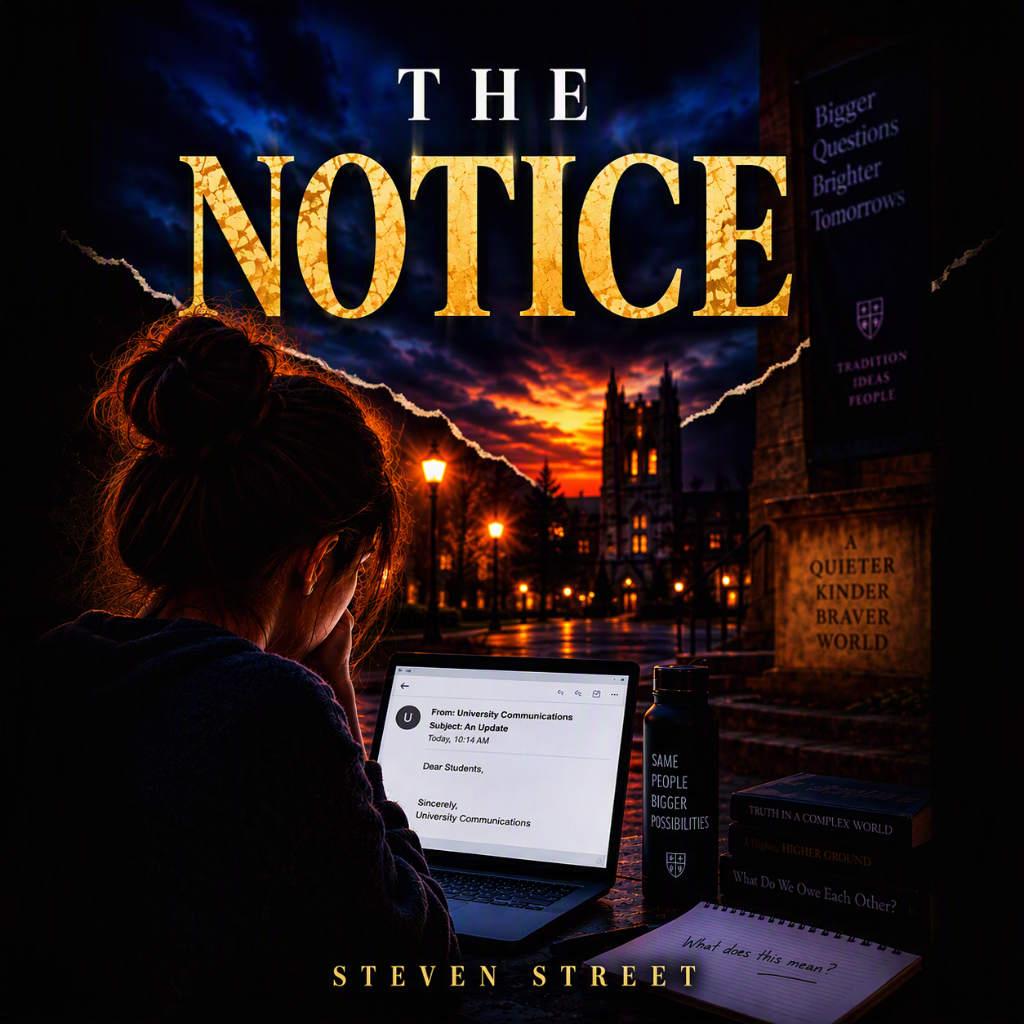
Institutions rarely mean to be mysterious. Most of the time, they’re simply busy, fragmented, or built from parts that don’t quite fit together. But when you’re on the receiving end of a message that doesn’t explain itself, the silence can feel louder than the words.
The Notice grew out of that feeling — the moment when a person realizes they’re dealing with a system that isn’t trying to hide anything, yet somehow reveals nothing. It’s not part of any larger series or storyline. It’s simply a window into the kind of quiet tension that emerges when procedure and perception collide.
This story is meant to stand alone, to be read quickly, and to linger slowly.
— S.S.
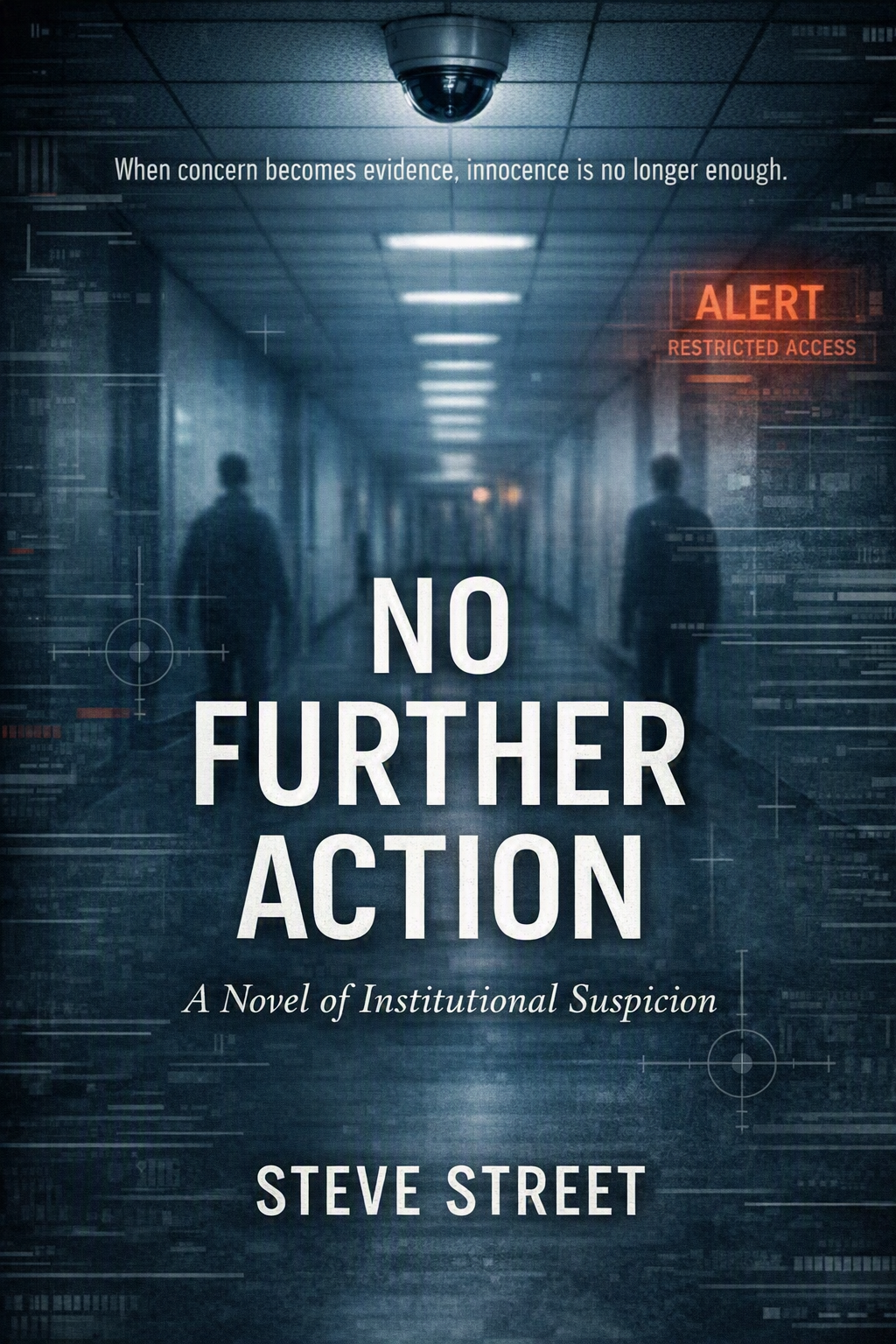
When a harmless joke is flagged as a possible safety concern, college student R.B. is summoned to a meeting no one will clearly explain.
The message is polite. The language is reassuring. But the alert offers no specific accusation, no clear policy, and no answer about who has seen the private exchange or where it has been stored.
R.B. begins documenting everything: the missing messages, changing explanations, security cameras, automated notices, and carefully worded warnings. Their friend Jonah tries to help, but his questions and support for other students soon draw attention of their own. Amara, already facing an academic integrity review based on data that may confuse assistive technology with misconduct, is pulled deeper into the same system.
No one openly accuses them. Instead, their questions become “persistence.” Their friendships become “influence.” Their efforts to help become “boundary concerns.” A recommendation begins to function like an order, while every office insists that nothing disciplinary is happening.
As records move between departments and ordinary conversations are reclassified as evidence, R.B., Jonah, and Amara must decide how much they are willing to risk for the truth—and for one another.
No Further Action is a quiet, psychologically charged literary thriller about institutional power, automated judgment, privacy, and the danger hidden inside ordinary administrative language. It asks what happens when a system can interpret your words, define your intentions, and keep watching even after the matter is supposedly resolved.
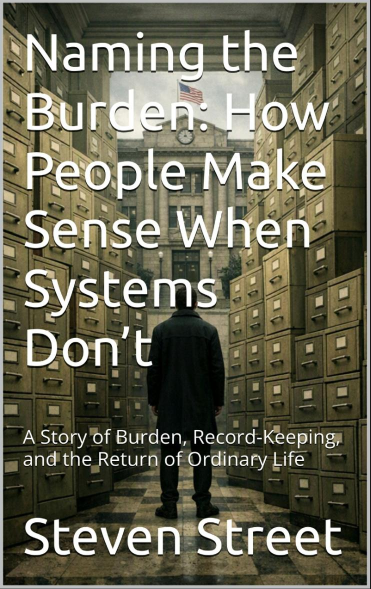
Naming the Burden
When systems fail, ordinary people often pay the price. Naming the Burden is a practical guide to staying clear-headed when institutions stop making sense. It follows one person’s experience of shifting explanations, missing records, and pressure to accept a story that does not match the facts. Through careful documentation, steady routines, and a commitment to the truth, the book shows how people can protect their judgment when official answers keep changing. Readers will learn how to: recognize early signs of institutional failure
stay grounded when explanations shift
document events clearly and consistently
separate facts from confusion and pressure
protect their judgment during uncertainty
maintain stability when the systems around them become unreliable
This is not a book about fearing the system. It is about understanding what happens when accountability breaks down—and finding the clarity, discipline, and resilience to move forward.